Loading...
Serving Fremont, CA and surrounding areas. (341) 204-3893
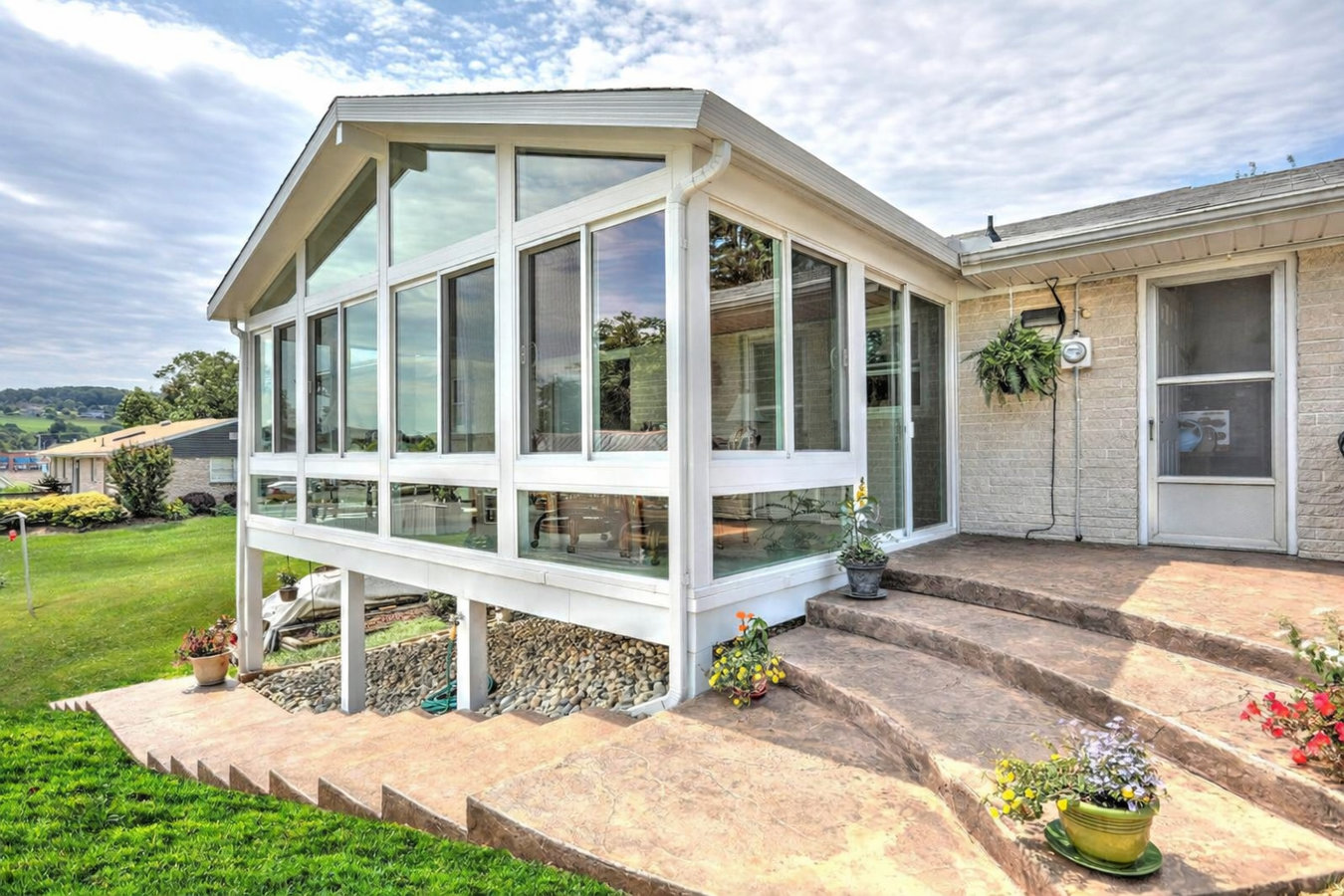
Fremont Sunrooms & Patios is a licensed sunroom contractor serving Castro Valley, CA, specializing in four season sunrooms, patio enclosures, and screen rooms for the community's postwar ranch homes and hillside split-levels. We have served the East Bay since 2015 and reply to every inquiry within one business day.
Castro Valley winters bring real rain - storms that last multiple days and dump several inches at a time - and an uninsulated room is cold and damp from November through March. A properly insulated four season sunroom with dual-pane glass and a dedicated heat source handles the wet winters and the warm dry summers equally well, giving homeowners here a room they use all year. Learn what goes into our four season sunroom builds and how we design for East Bay climate conditions.
Castro Valley's postwar ranch homes typically have a rear concrete patio that has been sitting in the weather for 50 to 70 years. That slab is usually the most efficient starting point for an enclosure project, but the clay soil under many Castro Valley yards means we always evaluate whether the existing concrete can carry the new structure before drawing anything. Enclosing the patio turns an underused outdoor space into a real room without the cost of a full structural addition.
Castro Valley's dry summer evenings are some of the best outdoor living weather in the East Bay, but the proximity to open hillside and creek areas means insects can be active from May through October. A screen room lets you keep the air moving and enjoy the yard without the nuisance, at a lower cost than a fully enclosed addition - a practical upgrade for homeowners who mainly use the outdoor space during the dry months.
With Castro Valley home values consistently above $800,000, a well-built sunroom addition adds livable square footage that holds real value. Single-story ranch homes in the valley-floor neighborhoods have low rooflines that make sunroom attachment straightforward, while split-level homes on hillside lots require more planning around the grade and drainage. We account for both scenarios during the site evaluation.
Many older Castro Valley homes have a covered but open rear patio with a basic roof structure that is close to being an enclosed room already. Converting that structure moves faster and costs less than starting from a bare slab, because the footprint and partial roof framing are already in place. This is a common first project for homeowners who want to test the space before committing to a full four season build.
Castro Valley's fog-influenced spring and early fall climate means outdoor temperatures can shift quickly from warm afternoons to cool, damp evenings. An all season room bridges the gap between a three-season enclosure and a fully climate-controlled four season sunroom - insulated enough to handle mild East Bay winters but designed with ventilation and shading options suited to the area's varied seasonal weather.
Most homes in Castro Valley were built between the 1950s and the 1970s, which means the concrete slabs, roofing, and exterior finishes on a lot of these properties are past their original designed lifespan. The community sits in a valley tucked into the East Bay hills, and a significant share of its homes are on sloped lots with grade changes in the backyard. Those slope conditions affect how a sunroom foundation needs to be designed - a flat-lot approach does not translate to a hillside site, and ignoring drainage on a sloped yard creates water problems inside the new room within a season or two. Castro Valley also sits on clay-rich East Bay soils that swell with winter moisture and contract during the dry summer, which is the primary driver of cracked concrete flatwork throughout the community.
Castro Valley receives more annual rainfall than most Bay Area flatland cities - averaging 20 to 25 inches per year - because the surrounding hills trap moisture from Pacific storms. That extra precipitation means flashing details, gutter connections, and drainage at the base of any new structure have to be built to a higher standard than in drier parts of the South Bay. Marine fog from the Bay rolls in regularly in spring and early fall, keeping exterior surfaces damp for days at a time. Wood framing, insulation, and the seal between a new sunroom and an existing home need to account for that persistent moisture or you will see problems inside the structure before the warranty period ends. The Alameda County Planning Department handles residential permits for Castro Valley as an unincorporated community - a different process than homeowners in adjacent incorporated cities go through.
Our crew works throughout Castro Valley regularly, and we understand the local conditions that affect sunroom contractor work here. Because Castro Valley is unincorporated Alameda County, permits go through the Alameda County Planning Department rather than a city building department - a distinction that matters because the county review process has different timelines and submittal requirements than a municipality. We submit drawings directly to the county, respond to plan check comments, and schedule the county inspections so homeowners do not have to figure out the county process on their own.
The neighborhoods we work in most are the valley-floor streets near Castro Valley Boulevard and the hillside areas climbing toward Lake Chabot Regional Park on the eastern edge of the community. Homes near the Castro Valley BART station on the flatter streets tend to have smaller lots with compact rear yards, while properties higher up the hills often have larger lots but more challenging grades. Castro Valley Boulevard is the main commercial artery that most residents use as a reference point, and we know the surrounding streets well enough to plan crew routes and material deliveries without surprises.
Castro Valley borders San Leandro to the west, and we work regularly on sunroom projects in both communities, which means our crew is already in the area often. We also serve Hayward immediately to the south, so Castro Valley homeowners benefit from the same crew familiarity with East Bay hills conditions that comes from sustained work across the corridor.
We reply within one business day and set up a site visit at a time that works for you. You do not need to be present for the full visit, though most homeowners find it helpful to walk through the space with us.
We measure the space, evaluate the slab and slope conditions, check the roofline attachment point, and review county setbacks for your parcel. You receive a written fixed price - not a range - so the project cost does not shift once work begins.
We submit permit drawings to Alameda County and manage the review process through approval. Construction follows on the agreed schedule - typically four to six weeks of active work on a standard sunroom addition.
We schedule the county final inspection and walk through the completed room with you before closing out the project. You receive the permit records and inspection sign-off for your home file.
We serve all of Castro Valley - from the valley floor near Castro Valley Boulevard to the hillside streets near Lake Chabot. Call or submit the form and we reply within one business day.
(341) 204-3893Castro Valley is an unincorporated community in Alameda County with about 61,000 residents, tucked into a valley in the East Bay hills along the I-580 corridor roughly 25 miles southeast of San Francisco. The community is predominantly residential and owner-occupied, with a homeownership rate around 65 percent - higher than most Bay Area cities. The housing stock is largely single-family homes built during the postwar boom of the 1950s and 1960s, with ranch-style and split-level designs making up the majority of the residential inventory. The valley floor has flatter streets with smaller lots, while the hillside areas above town have larger properties with sloped yards and views toward the bay. Castro Valley has its own unified school district, which draws families to the area and contributes to the long-term stability of the homeowner base. Learn more at the Castro Valley Wikipedia article.
The Castro Valley BART station on the valley floor is the community's main transit hub and a reference point residents use constantly for navigation. Lake Chabot Regional Park sits on the eastern edge of the community, a large East Bay Regional Park District property popular with hikers and cyclists that borders Castro Valley's hillside neighborhoods. Castro Valley Boulevard runs through the center of town as the main commercial street, flanked by the residential streets most people live on. Because many residents commute to Oakland, San Francisco, or Silicon Valley, there is consistent demand for contractors who manage the permit process completely and communicate proactively. We also serve Dublin and Union City, neighboring East Bay communities with similar housing profiles and commuter demographics.
Expand your living space with a beautiful, professionally built sunroom addition.
Learn MoreEnjoy your sunroom year-round with fully insulated, climate-controlled construction.
Learn MoreAdd a comfortable outdoor room usable through spring, summer, and fall.
Learn MoreTransform your open patio into a protected, versatile enclosed living space.
Learn MoreExpert new construction for sunrooms built to last from the ground up.
Learn MoreRefresh or upgrade your existing sunroom with skilled remodeling services.
Learn MoreKeep bugs out and fresh air in with a professionally installed screen room.
Learn MoreConvert your existing patio into a fully enclosed, comfortable sunroom.
Learn MoreTurn your deck into a beautiful, weather-protected sunroom living area.
Learn MoreEnjoy a fully conditioned room addition accessible and comfortable every season.
Learn MoreCreate a stylish enclosed patio room that blends indoor comfort with outdoor views.
Learn MoreMaximize natural light with a stunning glass solarium installed by our experts.
Learn MoreProtect your outdoor space from sun and rain with a durable patio cover.
Learn MoreLow-maintenance, energy-efficient vinyl sunrooms built for lasting performance.
Learn MoreWe serve every part of Castro Valley and handle Alameda County permits from start to finish - call now for a free, no-obligation estimate.